You Photographed the Whole Trip. A Smell Will Remember It Better.
Smell reaches the brain's memory and emotion centers faster than sight. Here is what three studies show about why a scent can pull you back into a trip.
Essays on memory, identity, and who we become somewhere no one knows our name.
How memory, identity, and perception actually work under travel's conditions.
A clear-eyed look at influencer culture, overtourism, and "hidden gems."
Who you become somewhere unfamiliar, and what happens when you come back.

Smell reaches the brain's memory and emotion centers faster than sight. Here is what three studies show about why a scent can pull you back into a trip.

Forestalgia, a yearning for an idealized future in travel, beat nostalgia in three travel ad experiments. Here is why it works, and where the research stops.

Minds wander 46.9% of the time, even on a great trip. Here is what two studies say about why, and one small habit that may pull your attention back to the trip.

Why do some trips stay vivid while others blur? A guide to how travel memory works, from anticipation to coming home, with the research behind each stage.

Locals protest tourists over two threats: housing and identity. Taxes and caps address the first. Here is what threat psychology says about the second.

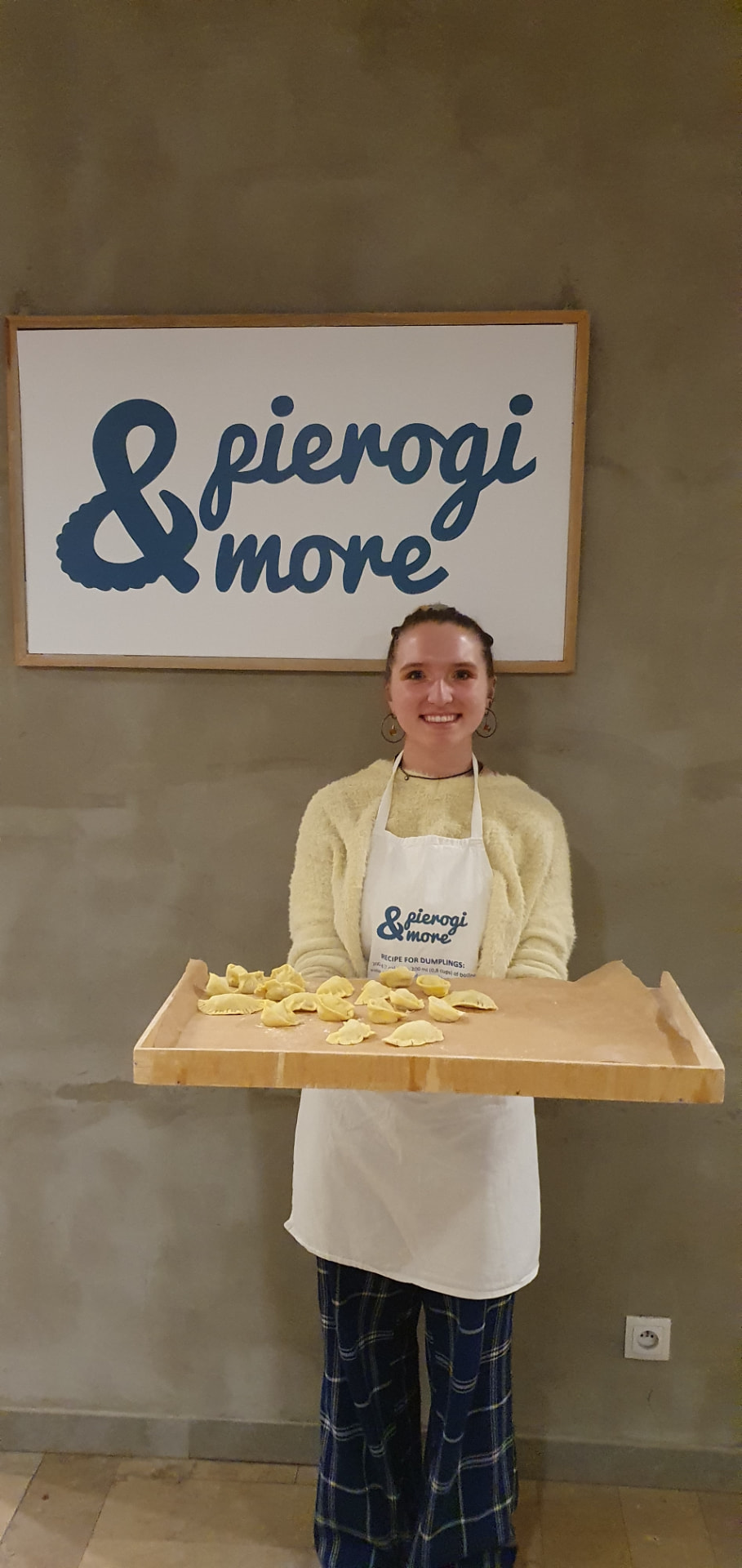
A grandmother's handwritten recipe, a Warsaw cooking class, and the research on why food memories hit harder than almost any other kind.

A foodie walking tour in Sofia turned into a lesson on why Bulgarian meals refuse to be rushed, from a yogurt bacterium with its own scientific legacy to a salad shaped like a flag.

Piața Centrală survived a wartime demolition and never stopped running. What one market's resilience reveals about the difference between visiting a place and understanding it.

A former New Yorker learns to pour Moroccan atay the proper way, and discovers that a ritual built to take half an hour is the whole point, not an inconvenience.

A trip to India didn't give Kiara clarity. It gave her perspective, and a hard lesson in why the urge to explain unfamiliar places is really a need for control.

A conversation with backcountry hiker Melanie Katz, plus research on awe and attention restoration, explains why a silent overlook can outdo any landmark tour.

Research on social media and social isolation, plus the real difference between connection and belonging, explain the loneliness paradox at the center of modern travel.

Transformative learning theory and the difference between observing and participating explain why a two-week vacation can vanish while one conversation stays with you for years.

A conversation with Boren Scholar Hari on stepping off the traditional university-career pipeline, and the research on why exploration before commitment builds a sturdier identity.

No local center, no cohort, no roadmap. Just a suitcase, a classroom, and a town in Moldova. The real origin story behind Put the Guidebook Down.

A conversation with sustainable travel blogger Lotte, plus real data on where tourist spending actually goes, on why the cheapest travel choices are often the most sustainable ones.

AI and social media don't personalize travel planning. They pattern-match it. Here's why thousands of people are booking your exact itinerary this month.

Typing a prompt feels like building your own trip. Research on the IKEA effect and the illusion of co-creation explains why that feeling is misleading, and what to do instead.

International arrivals hit 1.52 billion in 2025. What's actually changing isn't how many places people visit. It's what counts as worth visiting at all.

Some passports open more than 190 countries visa-free, others fewer than 30. What passport privilege means, and what to do with it once you notice it.

A destination can go from trending to off-limits overnight. Here's what political instability actually does to local economies, cultural exchange, and how to travel ethically through it.

Remote workers move abroad for culture and often reshape it. Kiara on the digital nomad paradox, expat bubbles, and how to stay without becoming the problem.

A global entrepreneur with two home bases and 40+ countries explains why the "freedom" of digital nomadism is really about choosing your own structure, not escaping one.

Escapism psychology and tourism motivation research explain why the dream of "starting over abroad" so often runs straight into the same problems, just in a new location.

Europe's new travel authorization system keeps getting delayed, now expected in 2027. The bigger story isn't the paperwork. It's what digital borders quietly assume about who can navigate them.

Cultural travel is becoming a buzzword slapped onto trips with none of the substance behind it. A framework for what responsible travel actually requires: preparation, presence, and participation.

Paris flushed the Seine, hid its scaffolding, and put on its best face before the 2024 Olympics. A conversation about what that reveals about every destination, all the time.

A Javanese mask performance that once ran for hours now runs for one. A Moldovan grandmother taught her a family recipe for free. What actually separates curated culture from the real thing.

Public transit instead of Uber. A homestay instead of a hotel. A popular checklist claims these choices define a "traveler." What they actually measure, and what they leave out entirely.
The assumption is that guided tours are shallow and self-planned trips go deeper. A newer traveler's honest pushback on that idea, plus the psychology of building travel confidence.

No crowds. No tourists. Almost no English. The founder of Put the Guidebook Down explains why a country with nothing built for visitors ended up teaching her the most about genuine connection.

A word that means "hi" in English and "let's go" in Romanian. A mosque, a dress code, a stranger's stare. The real difference between the cultural mistakes you can prevent and the ones you can't.

Most travelers think capturing a moment means they're present for it. Research on mindful noticing, plus a real lesson in eating with your hands in Java, suggests the opposite.

A conversation with Boren Scholar Hari on learning Bahasa Indonesia, plus research on how language shapes thought, on why fluency unlocks a completely different trip.

A conversation with Fulbright ETA Mike Dilluvio on teaching English in Marrakesh, the mentor advice that changed his whole approach, and the year his phone quietly updated "home."

A scarf goes from $100 to $20 the moment the bargaining switches to Arabic. Free vegetables at a Moldovan market stall for a few words of Romanian. What's actually being exchanged isn't goods. It's belonging.

She couldn't speak a word of Mandarin when she met her fiancé's family in Taiwan. That's the part that ended up mattering most. A guest conversation with Taylor.

Dor, an untranslatable Romanian word for longing, and a bus schedule with no timetable, just a photo of a sign. Two small proofs that living abroad rewires more than vocabulary.

A conversation with Abu Dhabi-based educator Remiah on identity, safety, and the cracks in tourism narratives that only show up once you actually stay.

A conversation with Santi Lozada, who's lived in New York, Spain, Moldova, Luxembourg, and Croatia, on why home stopped being a place and started being a growing list.

Five years of guides, an app and a podcast answered where to go. Here is the question they never asked, and what research says about who comes back.

Self-expansion abroad builds someone new. Nobody at home meets them. The specific, underdiscussed gap between the self a trip built and the self everyone still expects, and what actually has to change for the new one to survive.

Language retreats, cooking intensives, and craft workshops are booming. Here's the real research behind skillcations, and the line between genuine immersion and another certificate to post.

A friend's invitation to a traditional Indian wedding in Goa turned into a real lesson in cultural humility, preparation, and the difference between observing a culture and being welcomed into it.

A hotel begging you to reuse your towel while blasting the AC 24/7 isn't a sustainability program. It's a marketing trend called eco-theatrics, and here's how to actually spot it.

In 1946, twenty beavers were released into Tierra del Fuego to start a fur trade. Nearly 80 years later, that decision is still reshaping how a conversation with a 20-year travel podcaster about visiting Patagonia responsibly has to start.

A conversation with sustainable travel creator Sivan on why ecotourism, charity travel, and community-led tourism get treated as interchangeable when they're actually three very different things.

A canceled excursion in Belgrade, a reroute through the Romanian mountains, and the psychology of why leaving gaps in your itinerary produces better stories than filling every hour ever could.

A nine-hour train to a city she'd only see for two days. A hostel room she couldn't face. What travel burnout actually looks like, and the psychology behind why it happens.

Seven countries in six weeks left three of them nearly indistinguishable in memory. Slowing down for the last stop changed everything. Here's the psychology behind why.

Novelty encoding, the Von Restorff effect, and event segmentation theory explain why a ten-minute conversation with a stranger outlasts years of seeing the same coworker.

The photo-taking-impairment effect and research on algorithmic filter bubbles explain why performative travel disconnects people from the experience they paid for.

More trips, more photos, more AI-planned itineraries, and somehow less impact. Research on GPS, novelty, and memory explains why removing friction from travel also removed its transformation.

Environmental psychology research on place attachment, and a real return trip to Moldova that didn't feel the same, explain why destinations outlast people in memory.

A 2014 study on anticipatory savoring and a 2007 study on anticipation versus memory reveal that waiting for a trip isn't dead time. It's already delivering real happiness.

The same trick that makes New Year's resolutions actually stick is the one your memory has been waiting for you to use on everything else. Why routine vanishes, and how to manufacture the boundary that keeps it.

A ski town of 1,500 people took in 10,000 extra visitors after one TikTok video. Here's how the phrase "hidden gem" fuels overtourism, and what to call a place instead.

A trail goes from two hikers a day to over a hundred. A waterfall closes for five years. The real driver isn't crowds copying crowds, it's a single engagement stat the algorithm is built to reward.

Self-expansion theory, construal level theory, and identity process theory explain why the self that shows up abroad feels truer, and why that same freedom can turn into isolation.

The W-curve, deculturation, and a 2000 study on reverse culture shock reveal why the flight home is measurably harder than the flight out, and why we hide it.

Parasocial trust, information cascades, and the strength of weak ties explain why the spot an influencer shows you isn't hidden, and why a local's tip with zero proof is worth more.

A dinner table in Indonesia. Chaotic traffic in India. A methodology for understanding why some memories won't let go, built on holding three different lenses at once instead of picking a favorite.

A 1996 colonoscopy study and a 1993 pain experiment reveal your best and worst trips are stored by the same two-moment rule: the peak, then the ending.