A Gap Year Isn't a Pause. For Some People, It's the Career Move.
A conversation with Boren Scholar Hari on stepping off the traditional university-career pipeline, and the research on why exploration before commitment builds a sturdier identity.
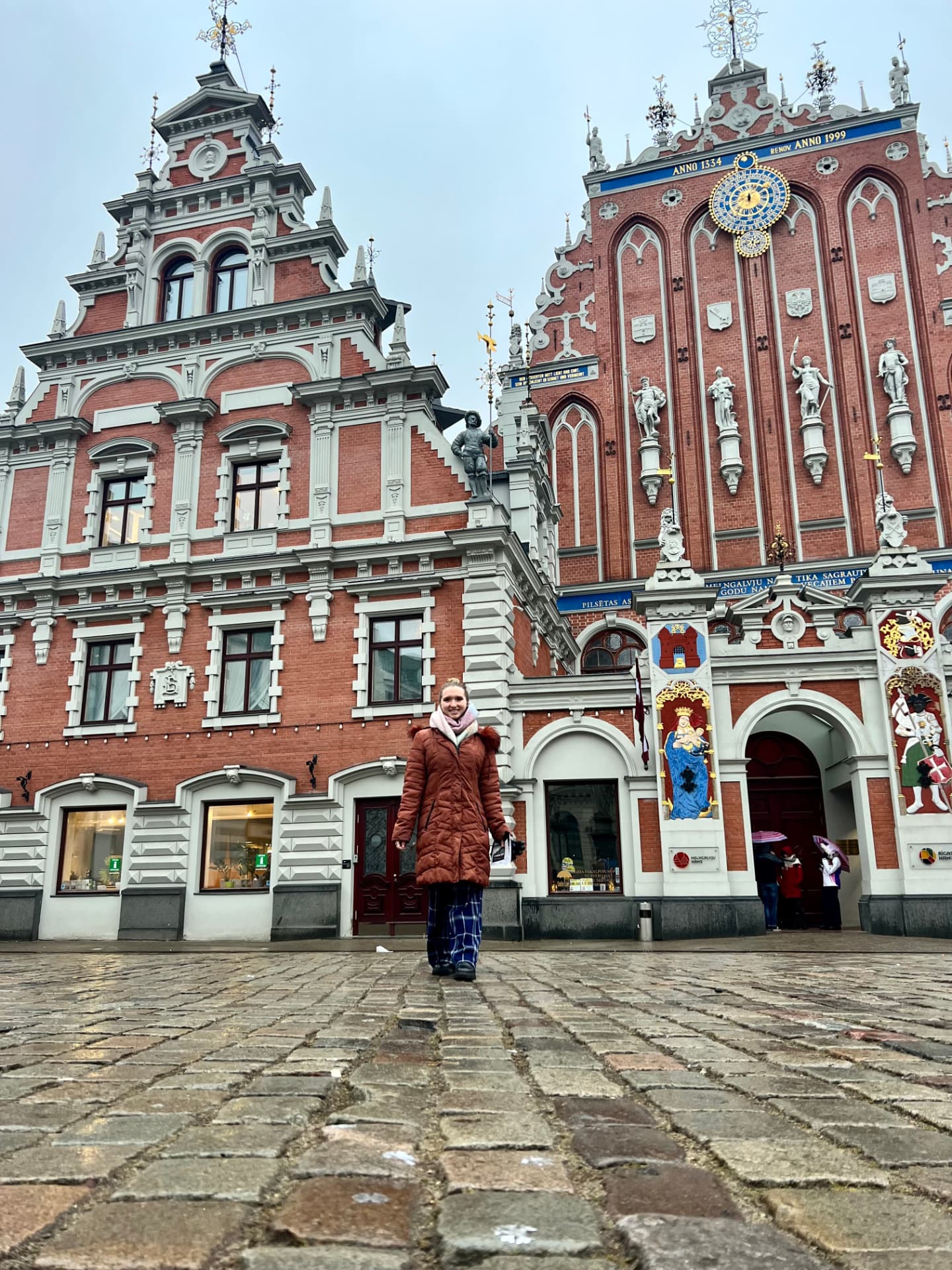
Hari, a Boren Scholar, Gilman Research Scholar, and student at the University of Alabama, chose intentional time abroad in Indonesia and Germany instead of moving straight through the traditional university-to-career pipeline most of his peers were on. That choice came with skepticism, from family, from friends, from the general cultural assumption that stepping off a linear path is a risk taken at the expense of "real" progress. The actual outcome ran the other direction entirely: identity, worldview, and professional direction all reshaped by an experience no classroom syllabus could have delivered.
A gap year or an extended period of intentional time abroad isn't inherently a delay to a career. Research on gap year outcomes consistently links the experience to greater career clarity and higher post-graduation employability, and developmental psychology explains why: real exploration before committing to a path tends to produce a sturdier, more durable sense of identity than committing without ever testing the alternatives.
The Skepticism Is Predictable, and Mostly Wrong
Stepping off the standard university-career track invites a fairly predictable reaction: concern about lost time, wasted momentum, a resume gap that needs explaining later. That reaction is understandable. It's also not well supported by the actual data. In the Gap Year Association's alumni surveys, former gap year participants report higher GPAs and shorter times to graduation than national norms once they return to their studies, and most say the year built skills they use in their careers. These are self-selected, self-reported results, so they show an association, not proof that a gap year causes the outcome. The math doesn't support the fear. A deliberate pause, taken with intention rather than avoidance, tends to sharpen a path rather than derail it.

Scholar Abroad Versus Tourist Abroad
There's a real, meaningful distinction between living somewhere as a student or scholar and passing through as a tourist, and it isn't really about duration. It's about structure and immersion. A tourist experience is generally curated: hotel, itinerary, attractions, a version of a place designed for consumption within a fixed window. A scholar's experience, built around programs like the Boren Flagship, is built around depth instead, coursework, community integration, and enough sustained time in one place that daily life itself becomes the actual curriculum.
Programs structured this way, funded through frameworks like the National Security Education Program, are specifically designed around critical, less commonly taught languages and regions underrepresented in standard study-abroad programming, with participants given real latitude to design coursework and fieldwork around their own interests rather than following a fixed tourist-facing script. That structural difference, self-directed depth instead of curated consumption, is what actually produces transformation. It's not the passport stamp. It's the design of the time spent there.
Where Identity Actually Shifts
The moment someone stops being "just a visitor" rarely arrives as a single dramatic scene. It tends to build through community and daily rhythm rather than itinerary: routines, relationships, the accumulation of ordinary days that eventually stop feeling foreign. That's a meaningfully different mechanism than the highlight-reel version of travel most people picture, and it's also the part that's hardest to explain to someone who's never experienced sustained immersion themselves.
What Developmental Psychology Says About This
There's a well-established framework in developmental psychology that explains why this kind of deliberate, unresolved exploration actually strengthens identity rather than delaying it. James Marcia's identity status theory, building on Erik Erikson's earlier work, describes a stage called moratorium: a period of active exploration undertaken before making firm identity or career commitments. Marcia's research found that people who genuinely explore their options before committing to a path, rather than settling early to avoid discomfort or uncertainty, tend to arrive at a more stable, resilient sense of identity than those who commit without ever testing the alternative.
A commitment made without exploration can look just as firm from the outside. It's the exploration underneath it that makes it actually durable. That's the real argument for treating a gap year, or any deliberately unresolved stretch of time abroad, as legitimate groundwork rather than a detour from a "real" path. The uncertainty isn't wasted time. It's the mechanism itself.
What This Actually Requires
None of this happens automatically just by leaving. The versions of time abroad that actually reshape someone tend to share a few features: real structure, genuine community integration rather than isolation, and enough duration that daily life stops feeling like a performance and starts feeling like an actual life. A short trip can be memorable. A sustained, structured immersion is what tends to change the shape of someone's actual direction, not just their photo album.

Listen to the full episode
Frequently Asked Questions
Does taking a gap year or extended time abroad help or hurt long-term career outcomes?
Research consistently links intentional gap year experiences to greater career clarity and higher post-graduation employability, along with, on average, higher GPAs and shorter time to graduation once participants return to their studies, compared to national norms.
What is the difference between studying abroad as a scholar and traveling as a tourist?
The core difference is structure and depth rather than length of time. Scholar-based programs emphasize community integration, sustained daily immersion, and self-directed coursework, while typical tourist travel tends to follow a curated, shorter-term itinerary designed for consumption rather than genuine cultural integration.
What is the Boren Scholarship, and what does it fund?
The Boren Scholarship, part of the National Security Education Program, funds undergraduate study of critical, less commonly taught languages and world regions considered important to U.S. national security and underrepresented in standard study-abroad programs.
What is identity moratorium in developmental psychology?
Identity moratorium, a concept from James Marcia's identity status theory, describes a period of active exploration before committing to a specific identity, career, or life direction. Research suggests this exploration phase tends to produce a more stable and resilient identity than committing to a path without first testing alternatives.
Is a non-linear career or education path considered a disadvantage by employers?
Not necessarily. Data on gap year outcomes shows a majority of participants report the experience clarified or confirmed their career direction, and a large proportion say it significantly added to their employability rather than detracting from it.