Locals Will Show You What Influencers Won't
Parasocial trust, information cascades, and the strength of weak ties explain why the spot an influencer shows you isn't hidden, and why a local's tip with zero proof is worth more.

Here's a hot take: that hidden gem found through an influencer was never hidden. Someone with a camera already found it, showed it to a few hundred thousand people, and the discovery was just joining a line that had already gotten long.
The hidden gem still worth finding isn't the one with proof attached. It's the one a local mentions once, off-hand, with no photos and no way to check it against a hundred other posts first. Three separate research frameworks explain why that unverified tip is worth more than the one with a million views behind it.
The Stakes
The real hidden gem is the thing a local mentioned once, off-handed, with no photos to prove it, something almost not worth going to because nobody else had posted about it. If the local trusted enough, they'd bring you there and ask for no photos, no posts.
We've been trained to trust the version with more social proof over the version with more actual truth in it. That's backwards, and there's real research on why we keep getting it backwards.
The Monasteries Nobody Was Posting About
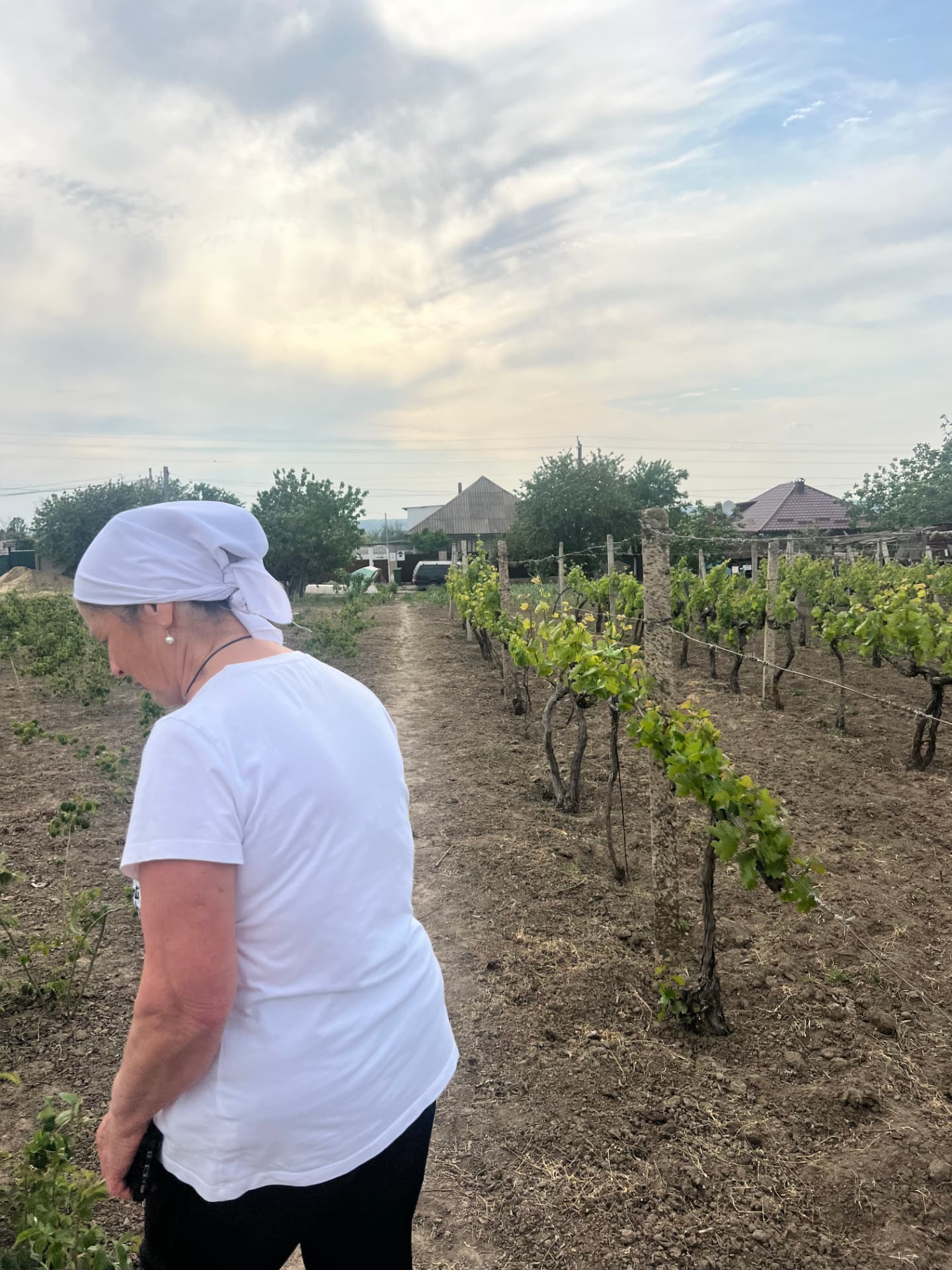
The painted monasteries of Bucovina came up through local friends in Moldova and conversations with Romanians while traveling through the region. At the time, they were mostly visited by regional tourists from the Balkans, with very few foreign visitors, despite being a UNESCO World Heritage Site. Barely any content existed about them online. Most people who visited heard about them through the grapevine or did the legwork themselves.
That's how the trip got planned: word of mouth, no influencer content, no polish. Today, Viator and TripAdvisor list day trips to the monasteries from Chișinău and Bucharest. Influencers found them. The once-quiet site now sees the exact flood of tourism it never had before, and the mechanism that did it is worth naming precisely.
Three Frameworks, One Backwards Trust System
Parasocial interaction theory explains why an influencer's word carries more emotional weight than it should. The concept dates to 1956, when researchers Donald Horton and Richard Wohl studied television and radio audiences and noticed they were forming what felt like real personal relationships with people who had no idea they existed. Travel research has since picked this up directly: followers genuinely perceive influencers as friends, so a recommendation gets filed under "advice from someone I trust" instead of "content I was shown."
Information cascades explain why everyone ends up at the same spots. The concept comes from economics, developed by researchers Bikhchandani, Hirshleifer, and Welch: once enough people make the same choice, others start copying that choice instead of using their own judgment, because it feels safer to assume the crowd knows something they don't. The first hundred people at a spot might be evaluating it honestly. The ten-thousandth person is mostly reacting to the fact that ten thousand people already went.
The strength of weak ties flips the whole comparison. Sociologist Mark Granovetter's 1973 research on job hunting found that casual acquaintances, not close friends, delivered the best leads, because a close circle already shares most of what you know. A weak tie sits outside that circle, so whatever they tell you is more likely to be genuinely new. Applied here: an influencer's tip reaches a million people, but the information itself is maximally redundant, everyone gets the identical tip at the same moment. A local's tip is the structural opposite. Low reach, but not redundant at all.
The Uncomfortable Part
Wanting to find hidden gems is genuinely good instinct. The problem is the tool. Ask an influencer, an algorithm, or an AI trained on influencer content to show you something undiscovered, and the moment they show it to you, it's been discovered by everyone else watching too. The tool built to find the hidden thing is the same tool erasing hidden on contact.
Real, unverified information doesn't come with the social proof people look for. It comes from someone with no audience telling you something once, and having to decide whether to trust it without any of the scaffolding people are used to leaning on. That's not a small ask. An entire review-and-rating industry exists specifically to reward trusting the version with more validation attached.
What You're Actually Choosing
Next time it's a choice between the place everyone's posting and the place one person mentioned once, notice the hesitation before trusting the second one. That hesitation isn't a red flag. It's a safety instinct reacting to what genuinely new information feels like now, after years of only encountering information that's already been pre-approved by a crowd.
Ask which one is getting chosen because of the place, and which one is getting chosen because of the proof.
Listen to the full episode
Frequently Asked Questions
Why do hidden gems stop being hidden once an influencer posts them?
Once a spot appears in influencer content, information cascade research shows other travelers start copying that choice instead of evaluating the location independently, and the resulting spike in visits erases the "hidden" quality the original recommendation was based on.
What is parasocial interaction theory?
Parasocial interaction theory, first described by researchers Donald Horton and Richard Wohl in 1956, explains the one-sided sense of friendship an audience forms with a media figure who has no awareness the audience exists, which is part of why influencer travel tips feel more trustworthy than they should.
What is an information cascade?
An information cascade, a concept from economics research by Bikhchandani, Hirshleifer, and Welch, describes how people start copying the choices of those before them instead of using their own judgment, once enough others have made the same choice, turning a recommendation into pure momentum rather than genuine information.
What is the strength of weak ties?
The strength of weak ties, from sociologist Mark Granovetter's 1973 research, is the finding that casual acquaintances often provide more valuable, non-redundant information than close friends, because a close circle already shares most of what its members know.
Are local recommendations actually more trustworthy than influencer ones?
Structurally, yes. A local's tip reaches far fewer people, but it hasn't been filtered through a cascade or repeated identically to a mass audience, which makes it more likely to be genuinely new information rather than a recommendation everyone already has.