Taking the Photo Isn't Paying Attention. It Might Be the Opposite.
Most travelers think capturing a moment means they're present for it. Research on mindful noticing, plus a real lesson in eating with your hands in Java, suggests the opposite.
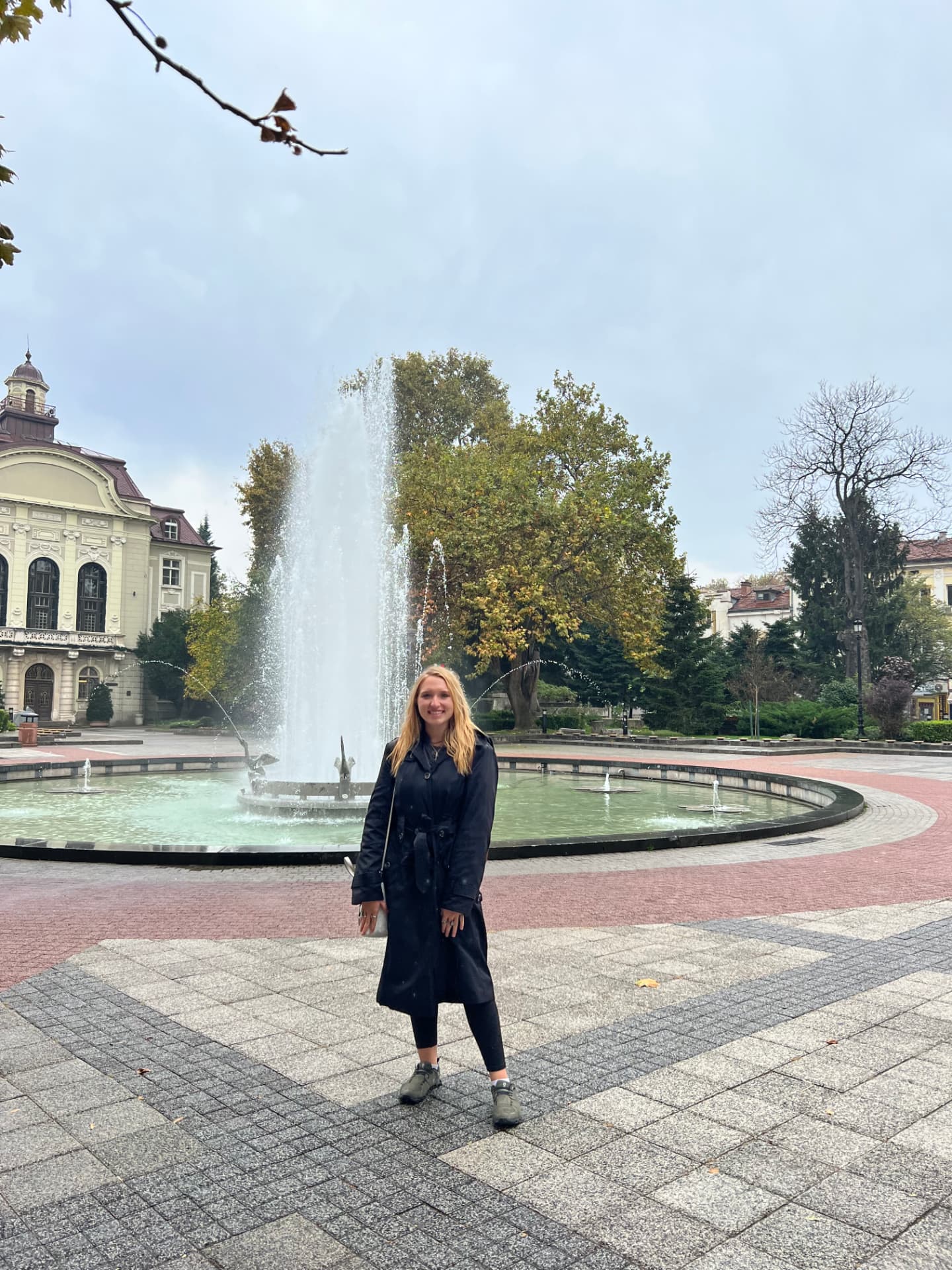
Most travelers assume they're engaged with a place because they're capturing it: the photo, the video, the guided walking tour with a headset delivering facts on schedule. Step back far enough and a different picture emerges. Phone up, eyes on a screen instead of the street, half-listening to a guide while scrolling for the next shot, that's rarely attention. It's often the closest thing to its opposite, a curated performance of presence standing in for the real thing.
Genuine observation while traveling is a learnable skill, not a fixed personality trait, and it's measurably different from the documentation most travelers mistake for engagement. Actively noticing sensory and cultural detail, rather than photographing or touring past it, is what actually deepens memory, empathy, and cultural understanding.
The Bubble Nobody Notices They're In
A phone screen, a pair of headphones, a guide narrating on a fixed script: each one is its own small bubble, a barrier between a traveler and the actual sensory reality of where they are. None of them are inherently bad tools. The problem is mistaking their convenience for genuine engagement. Observation is a skill, not an inherited trait, which means it can be built the same way any other skill gets built: deliberately, and with practice.
Why Noticing Is a Real, Measurable Practice
There's a well-documented psychological framework behind this that goes beyond travel advice. Harvard psychologist Ellen Langer's decades of research define mindfulness specifically as the active process of noticing new things, distinct from meditation or relaxation techniques entirely. Her findings link this kind of active noticing to measurable gains in wellbeing and competence, precisely because staying alert to context and detail keeps a person anchored in the present rather than running on autopilot through a place that deserves more attention than that.
That distinction matters for travel specifically. A guided tour or a phone screen tends to produce the opposite of noticing: a script or a scroll replacing direct sensory contact with an environment. The parts of a trip that actually stay memorable tend to be the ones that weren't scripted or photographed at all, the ones a traveler had to actually notice in real time to catch.
What Observation Actually Prevents
A small food stall in Malang, Java, selling fried chicken, rice, and sambal, delivered a genuine, low-stakes lesson in exactly this. The instinct, formed entirely by American dining norms, was to pay immediately after ordering. The staff's confused reaction made it clear that wasn't how it worked there: order, eat, then pay on the way out, an arrangement built on a level of everyday trust that felt startling to encounter directly. A quick scan of how other diners were eating supplied the second lesson before it became embarrassing: the dish was eaten by hand, no fork required, and a hand-washing station sat nearby for exactly that reason.
Nothing about that interaction showed up on a guided itinerary. It came entirely from watching first and acting second. That's the actual mechanism: pausing to observe before participating turns a potential moment of embarrassment into a moment of genuine cultural fluency, gained in real time rather than looked up afterward.
The Cues That Never Make It Into a Guidebook
Nonverbal signals carry enormous cultural weight and rarely appear in any pre-trip research. Open posture reads as receptiveness in some cultures; crossed arms reads as closed off almost everywhere. Physical distance during conversation varies dramatically by region, close enough to feel intrusive by one culture's standard is simply normal proximity in another. None of these cues come with subtitles. They only become legible through paying close, patient attention rather than assuming a home-culture default applies everywhere.
Suspending judgment long enough to actually observe, rather than reacting on instinct the moment something feels unfamiliar, is where cultural humility actually starts. It's a small pause with an outsized effect on how an interaction unfolds from that point forward.
Practicing It Off the Road Too
The habit doesn't stay contained to travel once it's built. Walking instead of taking transit, specifically to have more time to register a street's architecture and rhythm. Leaving headphones off in public, not for safety, but to actually hear the ambient layer of a place, the languages overlapping, the particular texture of a city's noise. A friend's weekly experiment took the idea further: choosing a themed destination, an ice cream parlor one week, and finding it entirely by asking strangers for directions along the way rather than pulling up a map. Each one of these is a small, deliberate refusal to let convenience replace contact with the actual place.
The Two-Part Practice
Put the phone down. Tune into what's actually happening before acting on it. Those two habits, repeated enough times in enough unfamiliar settings, build the same skill a psychologist would recognize as mindfulness and a traveler would just call finally being there. Meaningful travel doesn't begin the moment a plane lands. It begins the moment attention gets pointed somewhere real.
Listen to the full episode
Frequently Asked Questions
Does documenting a travel experience through photos and guided tours actually mean you're paying attention to it?
Not necessarily. Photographing, filming, or following a scripted guided tour can substitute for genuine sensory engagement, functioning more like a performance of presence than actual, active attention to the surrounding environment.
Is observation while traveling a skill that can be learned, or is it a fixed personality trait?
It's a learnable skill. Psychological research, including Harvard psychologist Ellen Langer's work on mindfulness as active noticing, supports the idea that paying closer attention to unfamiliar environments can be deliberately practiced and improved over time.
What is Ellen Langer's definition of mindfulness, and how does it apply to travel?
Ellen Langer defines mindfulness as the active process of noticing new things, distinct from meditation-based approaches. Applied to travel, it means staying sensory-alert and present in an unfamiliar place rather than relying on scripted tours or constant documentation.
How can travelers become more culturally observant without formal preparation?
Simple habits like removing headphones in public, choosing to walk instead of using transit, watching how locals behave before acting in an unfamiliar situation, and pausing before reacting to unfamiliar nonverbal cues can all build cultural observation skills without requiring extensive research.
Why do unplanned or unexpected moments tend to be more memorable while traveling?
Unplanned moments require active, in-the-moment attention rather than passive consumption of a pre-scripted itinerary, which tends to create stronger, more emotionally resonant memories than experiences that were fully anticipated and scripted in advance.