There's No Correct Pierogi. There's Only the One That Feels Like Home.
A grandmother's handwritten recipe, a Warsaw cooking class, and the research on why food memories hit harder than almost any other kind.
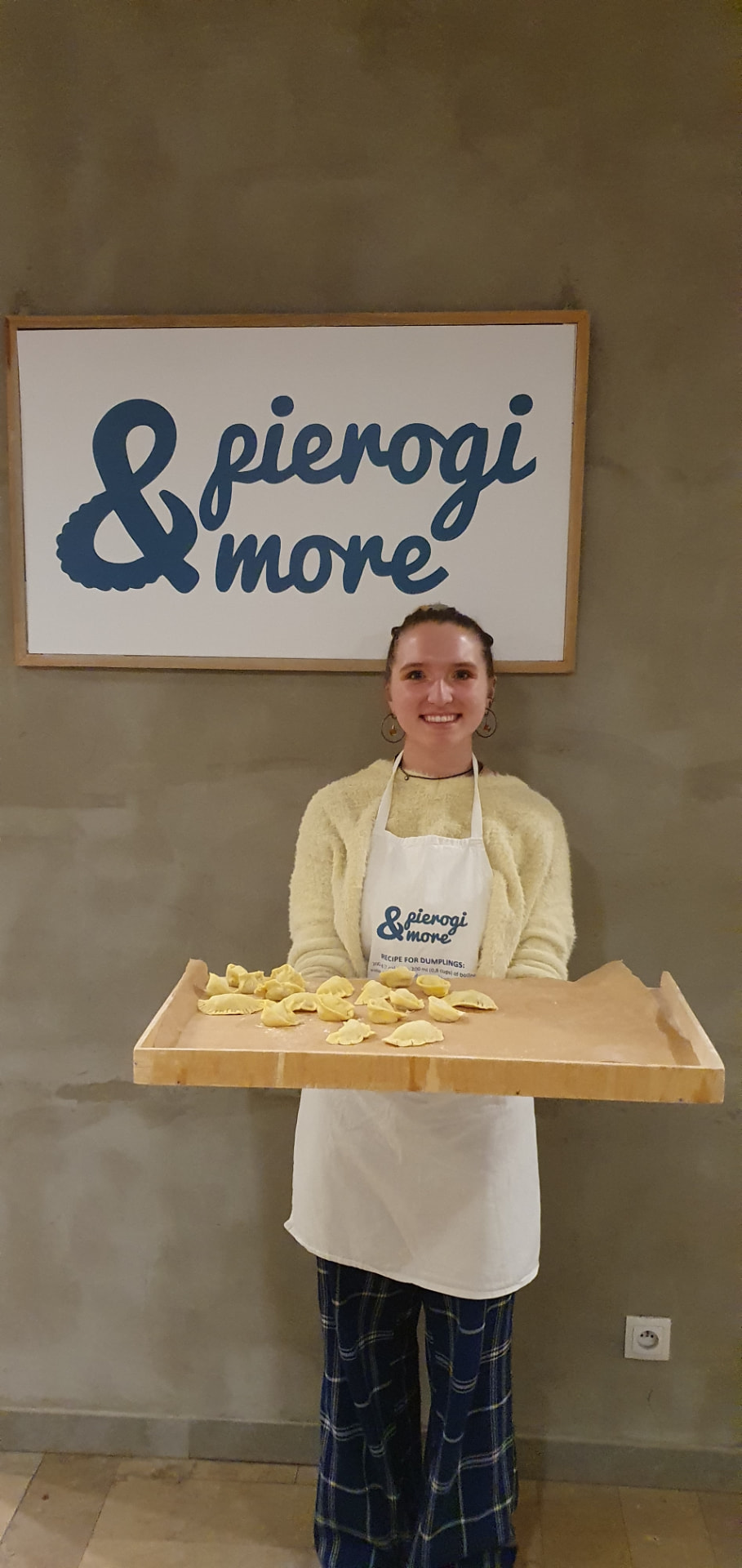
Poland has been invaded, partitioned, erased, and rebuilt more times than most nations can hold in a single history. Through nearly all of it, a simple dumpling survived: dough, filling, a fold, a boil. Pierogi didn't survive by staying identical across every century and every kitchen. It survived by changing shape in every hand that folded it, which turns out to be exactly the point.
Traditional foods like pierogi carry cultural memory not because there's one authentic, correct version, but because each family's variation becomes its own carrier of identity and history. Research on food-triggered memory, sometimes called the Proust effect, shows why these dishes hit differently than almost anything else a traveler encounters: taste and smell connect directly to the brain's emotional memory centers in a way few other senses do.
A Dish Older Than the Country That Claimed It
Pierogi's story stretches back further than most people assume. The dish traveled into Poland in the 13th century by way of East Ruthenia, and originally, further back still, from China, carried slowly along old trade routes and reshaped by whatever climate and ingredients it landed in next. The word itself descends from the old Slavic "pir," meaning feast, a gathering worth celebrating, which says something plainly about what the dish was always meant to be: shared, not solitary. A recipe that crossed that many borders before becoming a single country's defining comfort food was never going to have one fixed, correct form. It absorbed a version of everywhere it passed through.
What a Warsaw Kitchen Actually Taught
Making pierogi with a local teacher in Warsaw made the theory concrete. Her hands moved through the dough with the ease of someone taught by her mother, who'd been taught by hers before that. "In Poland, pierogi isn't a meal," she said partway through folding. "It's a moment." The process resists being rushed at every stage, the dough, the filling, the folding, whether or not there's a mountain of unmade dumplings still waiting. And then, almost as an aside: "This is why we make them with family. It's too much work to make alone." The slowness wasn't a flaw in the process. It was the actual mechanism producing the connection.
The Recipe With No Measurements
A grandmother's handwritten recipe, stained from decades of use, carries none of the precision a modern recipe card would insist on. No exact measurements, no technique notes. Just instinct, translated into instruction: add water until it feels like dough, add flour until it listens to you. Even the fillings carried their own distinct emotional register. Potato and cheese tasted like plain comfort. Mushroom and sauerkraut brought the smell of the forest indoors. Meat pierogi felt like the specific kind of winter meal eaten after walking home through snow. Making the recipe now isn't just following steps. It's retracing someone else's hands, her choices, her rhythm, a language that keeps being spoken long after the person who taught it is gone.
Why Food Memory Hits Differently
There's real science behind why a dish like this lands with more emotional force than a photograph or a souvenir ever could. Researchers studying what's often called the Proust effect, named for Marcel Proust's famous description of a tea-soaked biscuit triggering a flood of childhood memory, have found that taste and smell connect more directly to the brain's emotional memory centers than most other senses, producing autobiographical memories that feel unusually vivid, self-relevant, and emotionally charged. Scent and taste-triggered nostalgia has been linked specifically to greater feelings of social connectedness and a stronger sense of meaning, which helps explain why a specific filling or a specific fold can summon an entire kitchen, an entire relationship, an entire version of home in a single bite. A photo shows you a moment happened. A taste puts you back inside it.
No Single Correct Version, and That's the Point
Every region fills pierogi differently. Every family seasons it differently. Every home cook seals the edges differently, a slightly tighter pinch here, a different fold there, each one a small signature. Ruskie pierogi, despite the name, actually trace to Poland's eastern regions rather than Russia. Mushroom and sauerkraut versions carry Christmas Eve and autumn harvest associations. Meat versions lean toward winter and the practical instinct to waste nothing. Sweet versions shift with the season entirely, blueberries in summer, farmer's cheese and sugar, sometimes cherries. There is no single authoritative pierogi sitting in a museum somewhere waiting to be replicated correctly. There's only the version that tastes like somebody's specific home, which is a far more interesting kind of authenticity than uniformity would have been.
What to Actually Look For When You Travel
Dishes that require real time, real hands, and real patience tend to carry history in a way guidebooks rarely manage to capture. They reveal how culture actually gets passed down, generation to generation, kitchen to kitchen, in the specific and the ordinary rather than the monumental. Heritage doesn't always announce itself. Sometimes it's a bowl of filling resting on a windowsill, waiting its turn. Sometimes it's someone showing you exactly how tight to pinch the seam so it won't split in the boiling water. And sometimes it's simply the fact that something this humble managed to outlast entire versions of a country, and still, somehow, tastes like home.
This essay was first published as a written companion piece, not a spoken episode: Read the original on Substack · Subscribe for new essays
Frequently Asked Questions
Why does traditional food carry so much cultural memory and identity, even when the recipe changes from family to family?
Traditional dishes accumulate meaning through repetition and personal variation rather than strict uniformity, meaning each family's version becomes its own vessel for identity and memory, while still connecting back to a shared cultural origin.
What is the Proust effect, and how does it relate to food memory?
The Proust effect describes how taste and smell can trigger unusually vivid, emotionally charged autobiographical memories, connecting more directly to the brain's emotional memory centers than most other senses. It's named for Marcel Proust's famous description of a childhood memory triggered by a tea-soaked biscuit.
Where does pierogi originally come from?
Pierogi's origins trace back through East Ruthenia to China, arriving in Poland around the 13th century via old trade routes, and gradually adapting into the dish now closely associated with Polish culinary identity.
Is there one "authentic" or "correct" way to make pierogi?
Not really. Fillings, folding techniques, and seasoning vary significantly by region and family, and Polish culinary tradition treats this variation as part of the dish's character rather than a deviation from a single correct version.
How can travelers use food to better understand a culture they're visiting?
Seeking out dishes that require significant time, hands-on preparation, and generational technique, rather than fast or highly commercialized versions, often reveals more about a culture's history, values, and everyday life than monuments or guided tours alone.