Coming Home Isn't Landing. It's Starting Over.
The W-curve, deculturation, and a 2000 study on reverse culture shock reveal why the flight home is measurably harder than the flight out, and why we hide it.

Everyone prepares you for the flight out. Nobody prepares you for the flight back.
Coming home after living abroad is measurably harder than leaving, according to reentry research. The W-curve model, first proposed by psychologists John and Jeanne Gullahorn in 1963, shows adjustment dipping a second time on return, and that second dip is often deeper than the one abroad.
The Stakes
There are whole books, subreddits, and group chats built around one fear: landing somewhere new, not knowing the language, not knowing anyone. That fear gets talked about constantly. What almost nobody talks about is the flight back.
By every logical measure, coming home should be the easy leg. You already speak the language. You know where the grocery store is. Your bed isn't a hostel bunk. The research says that's not what actually happens to most people who've lived somewhere else long enough to change. Coming home doesn't feel like landing. It feels like starting over, except this time nobody around you thinks you need to.
The Version of You That Came Back
You built a version of yourself abroad. No scaffolding, nobody around who'd already decided who you were. That part, most people get. It's the part everyone actually asks about.
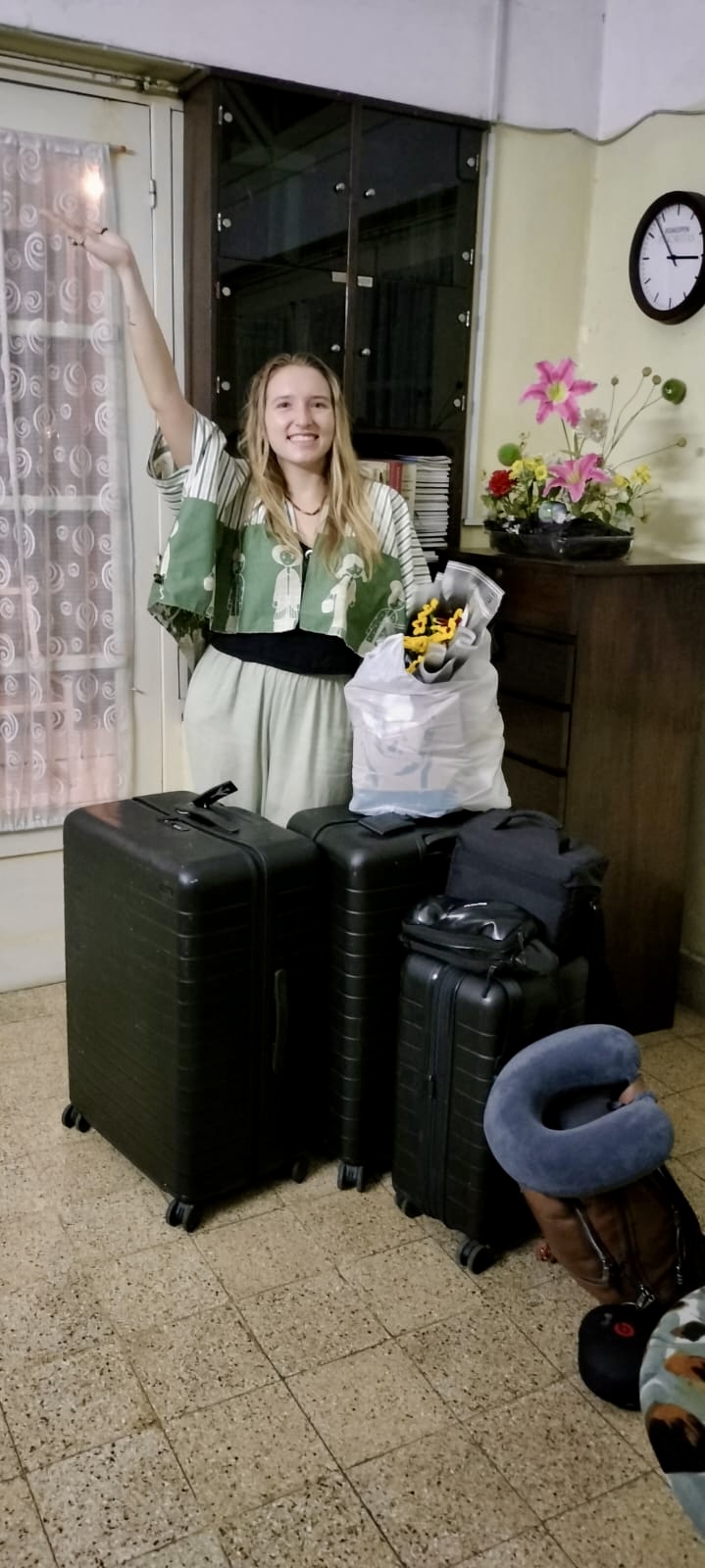
Nobody asks what happens when that built self has to move back into the room that stayed exactly the same. Here's a small, funny example. Not long after coming home from living in Indonesia, standing in a retail store back in the States, telling a friend a story about a stomach illness abroad in full, graphic detail, out loud, the way you'd tell it to someone who couldn't understand a word of English. Except everyone around could. Months of getting away with saying anything in public because nobody understood the language had quietly become a habit, and it didn't turn off just because the flight landed.
The smaller version of that same gap showed up in how conversations felt. Months of addressing people with proper titles, avoiding conflict in public, being deliberately, carefully polite, came home to a culture that reads as loud and blunt by comparison. Not wrong. Just suddenly, noticeably different, in a way nobody back home had any reason to notice changed at all.
The Shape of the Second Dip
There's a model in cross-cultural psychology called the U-curve, describing the shape of adjusting to a new culture. You land, you're excited, that's the high point. Reality sets in, the paperwork, the loneliness, the days nothing makes sense, and you dip. Slowly, you climb back out.
In 1963, researchers John and Jeanne Gullahorn looked at what happens after that U closes, when people actually go home, and found the shape doesn't stop there. It happens again: a second excitement, a second dip, arguably a harder one, on the way back in. Two U's, connected. They called it the W-curve.
That second dip is the part almost nobody plans for, because on paper it shouldn't exist. A researcher named Werkman, who spent years studying Americans returning from living overseas, found something that should stop you in your tracks: people who had lived abroad consistently rated leaving home and building a life in an unfamiliar country as less stressful than the jolt of coming back to their own.
Deculturation
The W-curve describes the shape of the dip. It doesn't explain what's actually happening inside it. For that, there's a term used in cross-cultural adaptation research: deculturation, the partial loss of automatic fluency in your own culture, the unwritten rules, the small talk rhythms, what counts as normal, without having fully gained fluency in the place you just left either.
You're not fully of the place you came back to, and you're not still of the place you left. For a while, you're not fully fluent in either one. That's what makes it disorienting. You expect friction abroad. You've braced for it. Almost nobody braces for feeling like a stranger in their own kitchen.

Why the Struggle Stays Invisible
In 2000, researcher Kevin Gaw studied college students who'd just returned from time abroad and measured something specific: how much reverse culture shock they reported, and what they did about it. Students with higher reverse culture shock reported more personal adjustment problems and more shyness. That part isn't surprising.
Here's the part that should sound familiar to anyone who's watched this pattern before. Those same students, the ones struggling most, were less likely to reach out for help with it. Not more. Less. It's a self-isolation response, the same coping pattern that shows up when a disrupted sense of self hits during a trip abroad, showing up again on the way back in, except quieter, because nobody around you thinks you need checking on. You're home. You're supposed to be fine.
Whose Fault Is the Dip, Really
If the version of you abroad was something you built, and reentry is a documented, second, harder dip, whose fault is that dip? The easy answer is that you changed and just have to get used to being back. That's not quite right.
Here's what actually seems to be happening. You come home changed. The room didn't. Your coworkers still expect the person who left. Your family had a role for you that got set before the trip and never got updated. Nobody around you sat through what actually happened. They just see you, apparently the same, and expect you to slot back in like nothing moved.
What Would Have to Change
Time doesn't fix this for a lot of people. It just gets negotiated down until the version of you that came back quietly gives way to the one everyone already had a role for.
Think instead about what would have to change at home, not in you, for the person you became somewhere else to actually survive coming back. Who would need to know something changed? What would you need to stop pretending didn't?
Listen to the full episode
Frequently Asked Questions
Why is coming home from living abroad harder than leaving?
Research shows the return trip triggers a second, often deeper adjustment dip than the one travelers experience arriving somewhere new, because nobody, including the returning traveler, expects to need to readjust to a place they already know.
What is the W-curve model of reentry adjustment?
The W-curve, proposed by psychologists John and Jeanne Gullahorn in 1963, extends the earlier U-curve model of culture shock by adding a second U-shaped dip that occurs when a person returns home after living abroad, producing a W-shaped adjustment pattern overall.
What is deculturation?
Deculturation describes the partial loss of automatic fluency in one's home culture, the unwritten rules and rhythms of normal life, without having fully gained fluency in the culture left behind.
Why don't people ask for help with reverse culture shock?
A 2000 study by researcher Kevin Gaw found that college students reporting the highest levels of reverse culture shock were less likely, not more, to seek help for it, a self-isolation pattern consistent with how people respond to identity disruption generally.
How long does reverse culture shock last?
Reentry research doesn't point to a fixed timeline. The adjustment tends to ease as home life gets renegotiated around who a person actually became abroad, rather than resolving automatically with the passage of time alone.