Travel Marketing Stopped Selling Your Past. It Found a Better Pitch in Your Future.
Forestalgia, a yearning for an idealized future in travel, beat nostalgia in three travel ad experiments. Here is why it works, and where the research stops.
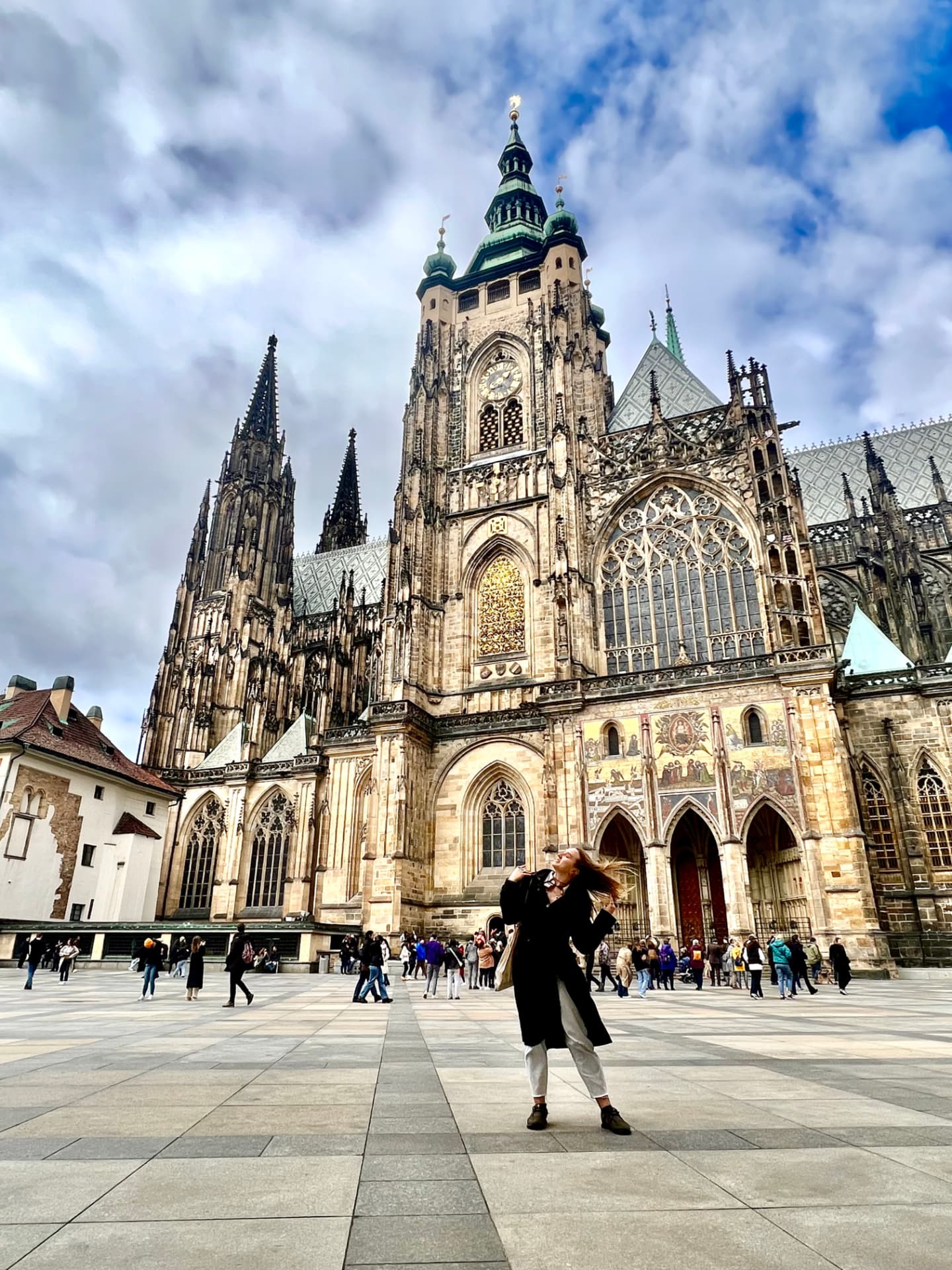
Think about the last travel ad that made you want to book. It probably wasn't someone looking back fondly on a trip they'd already taken. It was someone mid-laugh on a rooftop in Cappadocia with hot air balloons behind them, or working from a cafe in a rainforest and then jumping into an infinity pool, or riding a horse across a field in Kyrgyzstan. All of them show a life you haven't lived yet. That isn't an accident, and there is research on why it works.
Travel marketing has shifted from nostalgia to forestalgia, a yearning for an idealized future. A 2024 study of 665 US travelers across three experiments found that destination ads built around an imagined future trip beat nostalgia ads on intent to visit, and the advantage was strongest for trips that could happen within about a year.
The Pitch That Used to Run the Category
Nostalgia has been the default emotional lever in travel marketing for a long time. Old photos, copy that asks whether you remember when travel felt like this, warm filters. It is such a reliable formula that most of us don't register it as a strategy. It just reads as what travel marketing looks like.
Which is what makes the shift worth noticing. Researchers pitted that formula against a different one, and nostalgia lost, not once but in all three of the experiments they ran.
What the Study Actually Tested
In a study published in the Journal of Hospitality & Tourism Research, Ruiying Cai, Xi Y. Leung and Lu Lu ran three experiments with 665 US travelers, comparing two kinds of destination ads. One prompted people to recall a past trip, which is nostalgia. The other prompted them to imagine a future trip, which the researchers called forestalgia, a yearning toward an idealized future instead of a remembered past. In all three experiments, the forestalgia version produced stronger intentions to visit.
The researchers' explanation is the part that makes you think. Nostalgia is complicated. A real memory of a real trip usually comes with some mix of good and bad, a missed flight, an argument, a disappointing meal. I made a version of that case in Your Brain Only Kept Two Moments, about how the peak and the end of a trip crowd out the rest. A future trip carries none of that. It isn't a memory you're consuming. It's a trip you get to imagine exactly the way you want it.
Why the Pitch Works Hardest on the Next Trip
The advantage was strongest when the trip was framed as something you could book within about a year. The closer the trip, the harder the fantasy works. A near-term trip is concrete enough to picture in detail: booking the flight, picking the hotel, standing in the place. That makes the fantasy feel achievable instead of abstract.
When the researchers tested a trip framed as far off, the someday-after-retirement kind, forestalgia's edge disappeared, and nostalgia performed just as well. So the industry isn't choosing prettier ads at random. It leans hardest on the idealized future at the moment you are most able to act on it.
The Part the Episode Didn't Cover: Why the Future Feels Closer
The study's title, "When the Future Feels Closer Than the Past," borrows its wording from a 2013 paper by Eugene Caruso, Leaf Van Boven and colleagues on what they called the temporal Doppler effect. They found that people consistently judged future events to be psychologically closer than past events the same distance away. When the researchers reversed the metaphor of moving forward through time, the asymmetry disappeared.
I'm connecting these two papers myself, so treat it as an inference, not a finding. But it suggests that an ad doesn't just make a future trip look nice. A future trip may feel nearer than a trip you took a year ago, which is a useful property when what you're selling is a booking.
Two limits are worth keeping in mind. The outcome the researchers measured was intention to visit, not actual bookings. And the advantage faded for distant trips, so this is not a claim that nostalgia ads are useless, only that they lose in the near term.

The Pull Works on People Who Know How It Works
I work in marketing, so I recognize the selling tactic more than most people do. It still pulls at me. My current one is Central Asia, Uzbekistan, Kazakhstan and Kyrgyzstan. It has been on my list for years, and it is becoming more popular, so I keep seeing videos of people running through fields on horseback and thinking, yes, I want to do that. The algorithm keeps pushing me through the funnel toward booking it.
The same tactic shows up in other forms. The "how can you wait until you're retired when you can barely do it in your early 20s" videos push adventurous trips with a body clock attached. Festival-timed trips, like a Thailand booking moved up to coincide with Songkran, turn a vague someday into a date. All the content you consume has a purpose, and part of that purpose is to pull the trip closer to now. For more on how feeds do this, I wrote about it in You Think You Planned This Trip. The Algorithm Did.
What Bothers Me About It
Advertising using psychology isn't new, and it isn't scandalous on its own. What bothers me is this particular version. It is built on manufacturing a feeling about a future that doesn't exist yet, because that feeling is more persuasive than anything true about a trip you've actually taken. Nostalgia, whatever its flaws, is anchored to something real, a messy, lived memory. Forestalgia isn't anchored to anything. It's a feeling engineered around a fantasy that hasn't been tested against reality yet.
None of this makes booking a trip off one of these ads a mistake. We all do it, including me. It does mean the pull is worth examining.

What's Doing the Pulling?
The next time an ad gets close to you and pushes you toward booking, ask honestly what is doing the pulling. Is it the place itself, or is it the version of yourself the ad showed you standing in it, laughing, in golden hour light, beside an infinity pool, living a life you haven't lived yet? Both can be true at once, but only one of them is about where you're going.
Frequently Asked Questions
What is forestalgia in travel marketing?
Forestalgia is a consumer's yearning for an idealized future, the opposite of nostalgia. Travel ads built around forestalgia show an imagined future trip instead of a remembered past one.
Do future-focused travel ads work better than nostalgia ads?
Yes, in the research available. A 2024 study running three separate experiments with 665 US travelers found forestalgia-based destination ads consistently produced higher intent to visit than nostalgia-based ads, across every experiment. The study measured intent, not actual bookings.
Why does forestalgia work better for near-term trips?
Researchers found forestalgia's advantage was strongest when a trip was framed as bookable within the next year, because a near-term trip is concrete enough to imagine in real detail. For trips framed as decades away, such as a someday-after-retirement trip, nostalgia performed just as well.
Why is nostalgia a weaker travel marketing pitch than forestalgia?
A real travel memory usually comes with some mix of good and bad, a missed flight, a disappointing meal. Forestalgia carries none of that complication because it's an imagined future, not a real memory, which makes it easier to sell.
What is the temporal Doppler effect?
The temporal Doppler effect is a finding that people judge future events as psychologically closer than past events the same distance away. It was described in a 2013 paper by Eugene Caruso, Leaf Van Boven and colleagues.